
Resources aren’t just fancy words used in business meetings or textbooks. They’re the actual things you need to get something done - time, money, tools, energy, even people. Think about your phone. It runs on battery power (a resource), uses data (a resource), and needs your attention (another resource). Without any of those, it’s just a brick. The same goes for every project, habit, or goal you’ve ever tried to build.
If you’ve ever searched for massage escort dubai, you weren’t just looking for a service - you were looking for a resource that promised relief, comfort, or escape. That’s the same drive behind every resource search: someone needs something, and they’re trying to find the right one to fill the gap.
What Counts as a Resource?
A resource is anything that helps you produce an outcome. It doesn’t have to be physical. Time is a resource. Focus is a resource. A friend who listens is a resource. A free online tool? That’s a resource too. The mistake most people make is thinking resources are only things you can buy. But the most powerful ones often cost nothing - except your willingness to use them.
Take learning a new skill. You might think you need a course, a coach, or expensive software. But what if you already have the biggest resource you need: 20 minutes a day? That’s more than enough to learn HTML, practice Spanish, or write a short story. The problem isn’t lack of resources - it’s misidentifying what actually matters.
Why People Get Resources Wrong
Most people chase the wrong resources because they’re told what to want. Ads sell you the idea that you need more gadgets, more apps, more subscriptions. But here’s the truth: adding more tools doesn’t fix broken habits. It just adds clutter.
Look at productivity apps. There are hundreds. Not one of them will make you more focused if you’re scrolling through Instagram between tasks. The real resource you’re missing isn’t an app - it’s discipline. Or maybe it’s sleep. Or maybe it’s saying no to things that drain you.
One person I know spent $800 on a “life optimization” course. Two weeks later, they were still waking up at 2 a.m. scrolling through TikTok. The course didn’t fix their problem. What did? They started turning off notifications after 9 p.m. That tiny change - a shift in behavior - unlocked more progress than any tool ever could.
The Hidden Resource: Energy
Energy isn’t just how tired you feel. It’s your mental bandwidth, your emotional resilience, your ability to stick with something when it gets hard. You can have all the time in the world, but if your energy is drained, nothing gets done.
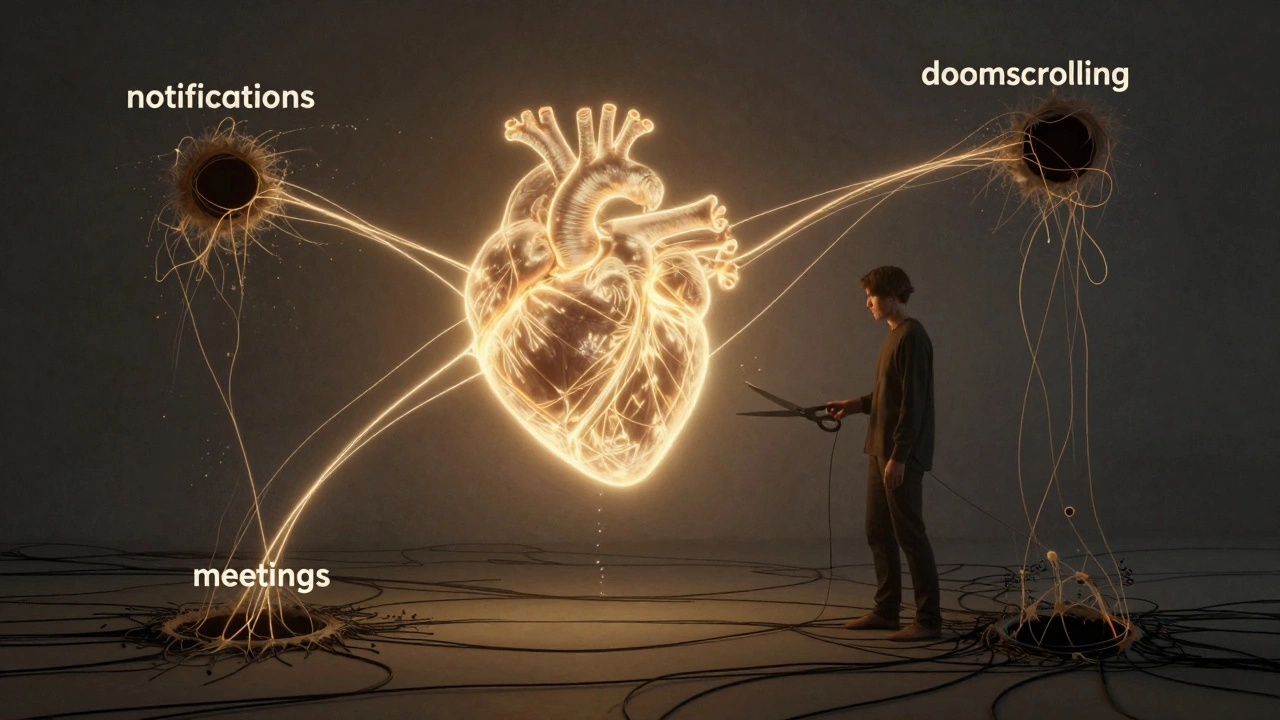
Think about your day. What eats your energy? Endless meetings? Toxic conversations? Constant notifications? Social media doomscrolling? These aren’t just annoyances - they’re energy vampires. And they’re stealing from the one resource you can’t get back: your attention.
One study from Stanford found that people who checked email every 15 minutes had higher stress levels and lower focus than those who checked only twice a day. That’s not a coincidence. Every time you switch tasks, your brain uses energy to reorient itself. That’s why you feel exhausted after “doing nothing” all day.

How to Find the Right Resources - Without Wasting Money
You don’t need to buy your way to success. You need to observe what’s already working. Start by asking yourself: what’s the smallest thing I can change that would make the biggest difference?
Here’s a simple method:
- Write down your goal. Be specific. Not “get fit” - “do 30 minutes of walking five days a week.”
- List everything you’re already using to reach it. Time? Phone? Shoes? A YouTube video?
- Ask: which of these are actually helping? Which are just taking up space?
- Remove one thing that doesn’t help. Add one thing that does - even if it’s free.
One woman wanted to write a book. She thought she needed a quiet room, a fancy laptop, and a writing coach. She didn’t have any of those. So she started writing on her phone during her lunch break - 10 minutes a day. In six months, she had a draft. The resource wasn’t the laptop. It was consistency.
When Resources Are Out of Reach
Sometimes, you don’t have the resources you need. Maybe you’re broke. Maybe you’re burned out. Maybe you’re stuck in a job that drains you. That’s real. And it’s not your fault.
But even then, you still have resources. One of them is your voice. Another is your network. Another is your ability to ask for help. People underestimate how much others are willing to give - if you ask clearly and respectfully.
There’s a reason community centers, libraries, and free online courses exist. They’re built for people who don’t have money but still have ambition. You don’t need a luxury resource to make progress. You need a smart one.
What You’re Really Looking For
When you search for something like dubai happy ending, you’re not just looking for a service. You’re looking for a way out - of stress, loneliness, pain, or boredom. That’s human. And it’s not unique to one place or one type of search.
Every resource search - whether it’s for a therapist, a job, a recipe, or a way to sleep better - is really a search for relief. The trick isn’t finding the perfect tool. It’s recognizing what you’re truly trying to fix.
Ask yourself: what’s the emotion behind this search? Fear? Shame? Hope? Once you name it, you can start addressing it directly - not just buying something to distract from it.
Final Thought: Resources Are Not Scarcity Problems - They’re Clarity Problems
You have more resources than you think. You just don’t see them because you’re looking in the wrong places. Stop chasing the shiny new thing. Start noticing what’s already in front of you.
That old notebook? That’s a resource. That 10-minute walk after dinner? That’s a resource. That friend who always makes you laugh? That’s a resource. The time you waste scrolling? That’s not a resource - it’s a leak.
Fix the leak first. Then build from what you already have.